On Romantic Relationships: a New Personal Best in Tell-Alls
- nolanlind

- Sep 1, 2025
- 25 min read
List of Chapters:
Daggers (intro)
I’m Dropping Hints that I’m Single
(and Neurodivergent)
I Dated a Girl Once
Who I Am Not
The Display Case
Well,
Alexa, play “Happy” by Leona Lewis

In college, I misunderstood one of my academic advisors and took “sign up for English 211 [writing about literature] or 213 [writing about science]” as “sign up for both 211 and 213,” and I failed both courses the semester I took them together. One thing I learned from taking and re-taking these courses was that the most effective and best-graded writing can be about new information, or about old information presented in a new way. These courses also taught me that my individual perspective was likely to be new information, and I like to think that I’m an authority on the topic of myself.
I call myself a writer in the sense that I best express myself through journaling and these personal-narrative essays. I’ve connected with people that have written for a living, and I feel like co-opting the title of writer is stealing their valor. I’d share more of my writing if I wasn’t convinced that I needed to be qualified to call myself a writer out loud. At best, I think of myself as another name on a screen next to a wall of text that might not even be good. If not to contribute anything, I write because what I want to write about will burn holes in my mind if I don’t. Organizing my thoughts and gentle-parenting myself is often what writing is for me, especially writings like these.
I am no stranger to depression, much less to the self-destructive thoughts that come with it. This becomes apparent through an idea that’s been in the back of my mind of writing Dear John-esque letters to each person in my life. In theory, these letters would start with recognizing how strained my relationship with that person might have been at the time; acknowledging my interpretation of the part they played in it, but also acknowledging as many parts that I might have played as I can realistically identify. Creating accountability for myself to take until recently had become a recurring theme, an idée fixe in the Symphonie Fantastique that is my life and what it is for anyone to be a part of it with me. These theoretical letters would then end in expressions of an absolving hope that the other person’s fading memories of me are at minimum as positive as mine will be of them.
Historically I haven’t had consistent kind words for myself. Even with the personal successes I regularly forget that I’ve achieved, I’ve spent more of this chapter of my life in states of hurt and confusion than most people would, whether at my own hand or just as part of being human. If not through kind words, my interpretation of self-care through hygiene, grooming rituals, and other indulgences would appear to be the extent of how I care for myself, but no one else sees the constant mental heavy lifting and the active reframing of thought processes happening behind the scenes. Hallmarks of adulthood like clothing and feeding ourselves and taking up constructive uses of our time are also not celebrated enough despite the effort those require of anyone, in my opinion.
Neil Hilborn wrote once about thinking of self-destructive thoughts as a glowing exit sign at a show that was never bad enough to make him want to leave. Having had bouts of self-destructive thoughts before, I can confirm that even just thinking the most heartbreaking words to hear anyone say somehow lessens whatever pain I’m going through, like cussing at a stubbed toe, if nothing else but by beginning to unpack and redirect those thoughts.
For time and repetition alone to make anything easier for anyone to face is unrealistic. The daggers I have for myself are still there, hiding just beneath the surface; a ghostly gossamer veil between mindsets that historically hasn’t taken much to lift or pierce through. Ideally, people work to get better at handling daggers safely over time. As they also naturally lose their edge, each writing like this at least helps to sort and redistribute some of those daggers back beyond sight.
We are all people with feelings, obligations, approaches to life, and lives to live. Having been single since the only romantic relationship I had ended in 2007, I thought I’ve already had time and space to figure out who I am and what I want. I believe in creating your own meaning of life, but figuring that out so far has proven to be an ongoing process for me.
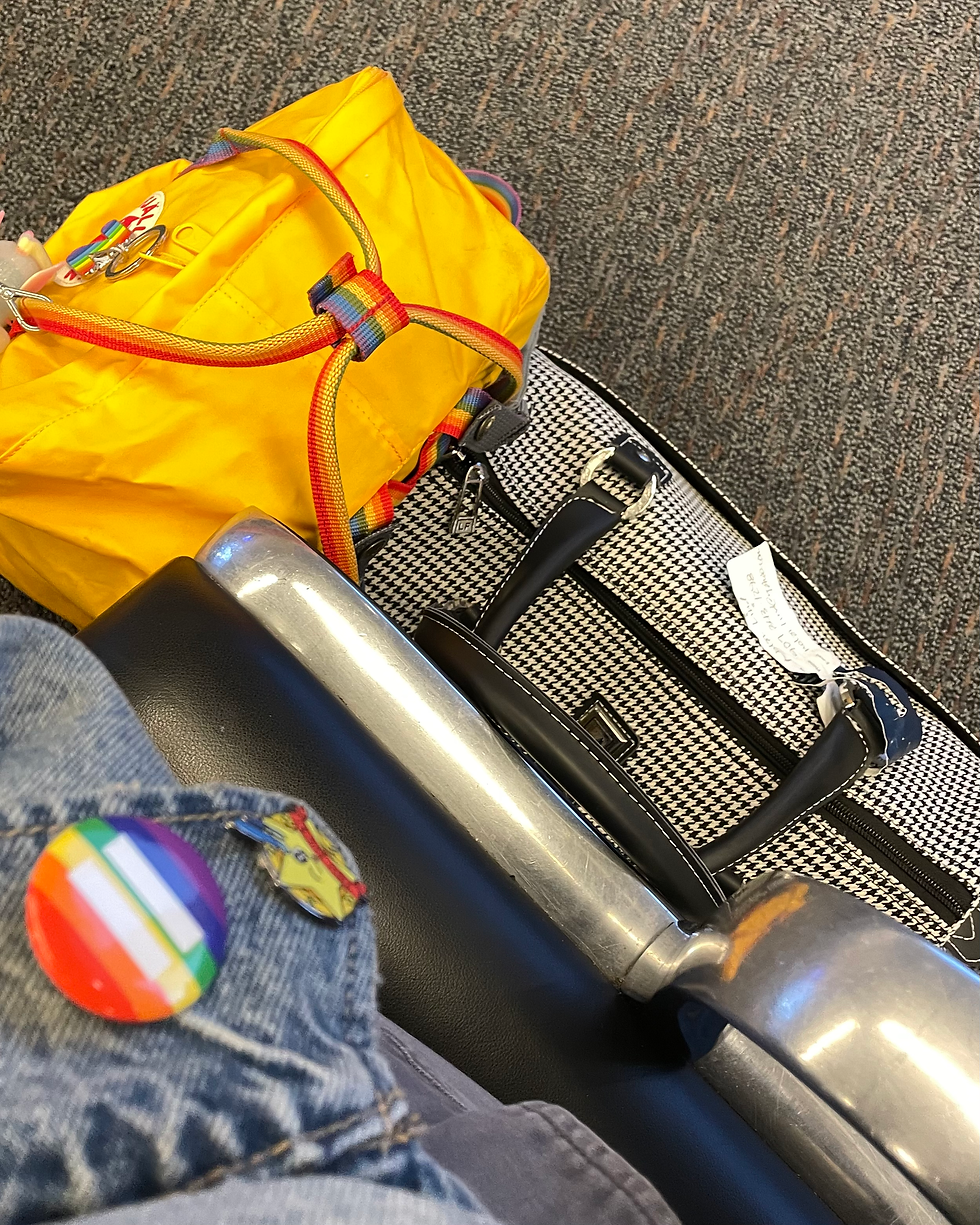
I am no one’s priority. Romantically, such should be the case in a world where apparently no one owes anything to anyone else. Such a realization should feel freeing, but I don’t feel free. Freedom implies autonomy and the joy and excitement that come with it. I still get lonely; never miserable, but for a while at times I would also desperately cling to any positive attention that I received. I’ve since at least started recognizing how I want to be treated—not because I need to love myself before I can love others, but because knowing how I want to be treated is the best way for me to recognize when I’m feeling mistreated by others. Those self-help meme pages on Instagram were right.
I was fortunate to have traveled out of state three times in 2024. The hardest part of returning from traveling is that I feel celebrated and interesting whenever and wherever I travel; but beyond returning to the comforts of home, what other comfort I find is in returning to the structure of routine. Routine to me means the sense of mental and emotional safety that I crave with my disability, especially after a lifetime of living in my brain’s natural programming of a near-constant state of fight-or-flight. My approach to a clinical-depression diagnosis in 2015 was focusing on treatment whose success I felt hinged on a sense of reaching a cure. After my inattentive-type ADHD diagnosis in 2022, my focus relaxed into accommodating myself and managing my symptoms, which feels more forgiving than thinking in terms of “curing” or even just treating it.
Receiving that ADHD diagnosis started a new chapter in learning about myself. Having a diagnosis, however, can also feel like license to give anyone to dismiss me as “crazy,” and sometimes dismissing myself as “crazy” is easier than figuring out why I feel how I do. My world used to fall apart if I didn’t hear from anyone that I regularly heard from. My genuine concern for them aside, I’d also forget that I still existed outside of the context of “us.” My feelings would pass through like visitors, but not without trashing the place on their way out. Knowing I’m overreacting out of fear of rejection or abandonment is maddening. To tell anyone about it feels like pointless, self-centered complaining, but that never stopped me before. Things also find their way out of my mind when they fall out of my sight, and I think my resolve always proves better than I usually expect—but I do like to be dramatic about things first.
I recently vented to people that I wasn’t doing great, and because it had to do with my love life I didn’t expect anyone to respond with anything that wasn’t unsolicited advice. I know how much of my life and my situations is by my choice. I’ve had a habit of being cruel to myself, but I’m also convinced that anyone saying “I told you so” is less interested in helping me out than padding their own ego. And while I appreciate sentiments that I’ll “find someone”, those sentiments are also a slippery slope to agonizing over why I haven’t “found someone” already. “Dump him” as advice is a meme at this point, and people think a hostile approach will help anything when I’ve already stopped accepting negative reinforcement. Granted, no one responded how I thought they would; this was just me anticipating the worst, as it always was.
I don’t always want a solution during my problem times, and I don’t want to punish myself anymore. The best way for anyone to support me during times like this when I might seem beyond help is just to remind me that I am and will be okay. That’s all it needs to be, and it always works because that’s all it comes down to. I could tell myself that, but it means more and feels truer to hear it from other people.
People can also say they miss me when I’m gone or they don’t hear from me, and I would generally believe them. At my worst, I would tell myself that I don’t feel missed—instead seeing through to the unspoken “and the things you do” that I would imagine following at places like home or work, warm spaces of connection but also shared spaces of responsibility. For a while at my lowest I would ask my mind’s images of people I knew, “what do you need me for? Why do you keep me around?” Because if I couldn’t love or be loved, I could at least be useful, and being useful meant I was still worth keeping around.
For me to find community and support in adulthood meant starting from a foundation of dubious self-esteem, a byproduct of growing up “weird” (non-athletic and already visibly queer, honestly) in the western public education system of rural Alaska. Conscious efforts to repair and rebuild that self-esteem diminish its dubiousness and its impact on how I utilize that support to continue navigating life.

I’ve only had one romantic relationship before, and it was in high school with a girl. If I remember correctly, it was the summer before my senior year of high school that I dreamt of marrying a girl I’d never seen before. When I saw this girl join my class, I knew she was the girl from that dream. I asked her out by gifting her a mix CD on her birthday that September, days short of my parents’ wedding anniversary, and we graduated together. After starting college I decided that to sacrifice my honesty to stay together as she and others expected, still would have been a sacrifice of my honesty and could only be unfair, especially to her. I had a dream come true that didn’t turn out to be what I wanted at 18, but it did turn out to be where I got my start in advocating for myself.
When it comes to dating in adulthood, I used to think I didn’t feel appealing or compelling enough to make the first move—even if the other person did receive me and return my advances, which is the bare minimum that I’ve come to accept as exceptional for someone like me to experience. I would curate a wardrobe and try to give thoughtful gifts because I used to think my presentation and the value of my gifts paralleled my value as a person. I would feel that I had no other choice or chance at success at anything otherwise.
In my inexperience and naivete, I also used to think that fully-realized committed romantic relationships started from the first “date”, however accurately or loosely defined. It feels impossible to overstate how dishonest and unfair this is and has been to my dates. I used to make something out of my dates and me that we weren’t, which would then become the basis of how I interpret my experiences and how I reacted to those interpretations. A day without hearing from them would feel like being ghosted. To hear that they started seeing someone else would feel like I was cheated on, despite how little I did to keep that from happening. There also remains debate on when cheating is considered cheating; and whatever “official” means, I have yet to reach and stay at that point with anyone in adulthood anyway.
Trixie Mattel said in a video recently that “not every moment has to be the beat drop,” which spoke to me. For a while I took silences as snapshots of my own trauma with passive aggression being replayed in real time. In these snapshots, I did something wrong and it was up to me to figure out what it was. It was up to me to bend over backwards, creating things to apologize for, to make up for it. Not every moment has to be the beat drop; no one has to give 100% all of the time. It doesn’t have to be daily check-ins when we don't have daily updates for each other, and it doesn’t have to be emoji-reacts on everything I send the other person. These, however, would let me know that I was still in the other person’s orbit between messages and between seeing each other. It feels immature and unreasonable to feel anything about being left on read, but it’s been a hard habit for me to unlearn taking a lack of response as a negative response.
“Get curious rather than confrontational during times of withdrawal”, say the self-help social media posts and millennial-core books introducing the concept of “attachment styles” (and their respective vilification) to the mainstream vernacular. My curiosity is an irresistible force, but my respect for boundaries and privacy are an immovable object. During times when my dates would withdraw, I felt that any attention from me was too much and unwelcome despite how much they might’ve needed someone in their corner. I would also wish they “used their words” when I hardly used mine.
I control my response to and interpretation of what I am shown and told, because my response is my business. This is where I would struggle during low points or quiet times: I’ve already felt that keeping friendships with friends that have or enter new relationships of their own was taking them away from their partner(s), and I still don’t know how to offer support or express anything else without sending more messages online, further adding to everyone’s stress and social-media burnout. I want to respect my dates’ independence, but I would rather have their answer because I don’t like the answers I’d come up with on my own. Luckily, my sense of holding back on what I don’t tell or haven’t told people is finally fading with age.
At my worst, I would reduce myself to a hyper-hedonistic free agent, and I would tell myself that I’m only placated as anyone’s time away allows from the rest of their lives. Some would reduce this to “at [the other person’s] convenience”, but most things in life are at someone’s convenience, and they’re as much at mine as they are anyone else’s. What I wouldn’t do in making time for someone else or even asking what that would look like for them, I had only ever known how to make up for with material gifts without expectation of reciprocation.
Living with my family is an immense blessing of grace beyond measure. It’s also an embarrassing imposition to admit to, an indictment of costs of living, and a privilege of luxury that I wouldn’t trade for anything. I love my family, as much as I withdraw from everyone including them. Living with my family is not my end goal, but it has left me with enough to provide for and live vicariously through other people building lives for themselves and their loved ones. Their happiness would become mine in part, sustaining me until I was comfortable to begin working towards independence myself. It wasn’t until restarting therapy within the past year that I accepted that I didn’t need to buy attention or affection anymore, that I have value beyond how useful I am or the material things I provide, and that I can start investing directly in myself.

At the core of who I am still lives the boy in elementary school who threw a softball less than five feet on Track and Field Day—wishing repeatedly and out loud that I was John Elway because that was the biggest name I could think of at the time—when everyone around me was a professional athlete by comparison. Now I live in a world where capitalistic ideals pressure people out of affording patience to those like me that need it. I also believe most things people say, but sometimes I forget that talk doesn’t always mean much. In my experience it has only ever been me that needed to fall back in line, to return to Earth, to stop reading into things, and to get on everyone else’s level of (un)seriousness.
I have a history of being mean to myself at my worst “so no one else can be.” In dating, I would think of everyone else as an established food critic and connoisseur, and of myself as a fast-food deal-menu meal. At my best I know the true variety I have to offer, but I also know that others can find everything and more elsewhere. At my worst, I would wonder if anyone regretted making that match with me, sending me that first message, seeing that first movie, inviting me over that first time, or agreeing to dates and everything else I proposed we did since. To twist the knife that only I ever put in myself, I would tell myself yes.
At my worst, I would view being myself as a comparative disadvantage, and I would see myself as an option to people more often than a choice. I would think that everyone was letting me down easy and that I was missing the hint. I would repeat to myself that people will fuck me but won’t date me, but I was the toxic one. I would call myself crazy and manipulative, and then I would think that my worst fears were realized: that I was everything from other people’s past relationships that I didn’t want to remind them of.
I used to wish that I could be anyone but the person I’d endured so much to become and worked so hard to present to the world. I would think that I was missing something, or that something was wrong with me. I’m not a cisgender woman that can publicly be seen with a man without a spectacle being made of how I present myself to the world, or how I experience attraction and navigate love. I would concede that I was broken because of this, forgetting that the people that deserved a healthier version of me included myself.
At my worst I would view immutable aspects of myself as liabilities, and I would call myself disgusting. To think that I could compete in any sense with anyone’s other responsibilities, relationships, or recreation—healthy essentials to existence—I would call a farce. I shouldn’t feel compelled to compete for the right person, but on paper I more closely fit the profile of media that most people might consume after dark than that of a more wholesome lifestyle fit.
Dating for non-cisgender, non-heterosexual people is not as clear a concept as it might be for everyone else. My experience with the institution of dating, as a transfeminine (visibly they/he pronouns) queer person of color (Yup’ik and Sugpiaq) and of size (200 pounds at 5’4”), has ranged from feeling like an abomination at worst to a fetish at best. Lines also blur heavily between friendship and romance outside of a heteronormative lens. These lines aside, at my worst I would reduce “a more wholesome lifestyle fit” to “someone to be publicly proud of.” There’s only so much I can do about any of these parts of myself. Seeing my family’s faces in my own has freed me from ever calling my looks into question, and I am proud of my heritage even with how disconnected I feel from it. Feeling anything about something doesn’t take away from whether it’s true or not, but being proud of myself still feels like a tall order at times.
With my dates, when our individual interpretations of “us” did not align with each other, I would try to meditate on “neither right nor wrong; neither good nor bad, just different” because I didn’t want to fault anyone else for anything before. More than one person can play a role in my heartbreak, but I’d only ever minded my own role because I was conditioned to think that’s what the ideal partner did to keep their partner’s conscience clear. This can’t be healthy, but we live in a world where people are afraid to be themselves, love who they want, or mind their own goddamn business—and the worst of them unironically think that violence is the answer. For this, I feel that I should be grateful for interactions that don’t end in assault or murder, which tragically has been the fate of so many of my peers before me.
At my worst, however juvenile and weird, I would also think that people rejoiced in my being alone. I would fault myself for being trusting and loving, and for having wants and needs. I would call myself needy, clingy, and high-maintenance thinking that these were the worst things anyone could be. I would call myself selfish and greedy for wanting a partner, and entitled for wanting anyone specific as a partner. I took a full day to cry once because I didn’t get something I wanted, something I didn’t know what I’d do with it if I got it, and I called myself childish and immature for it. I couldn’t always put into words what I thought I wanted because I didn’t always know what that was, and I felt “just like everyone else” for not knowing. I would also forget that no one ever actually told me any of this: I was only ever judging myself based on dating horror stories in public forums online, and I was only punishing myself for not being in life where I thought other people thought I should be.
At my worst, I didn’t see how years of sobriety and progress “working on myself” had yet to amount to anything to show for it, if I even knew what that looked like. I would remind myself that what anyone could feel enough to pursue others, they have yet to feel for me. I would then have to remind myself that it’s selfish to hope feelings change, and that it’s downright evil to hope others’ relationships don’t work out. At my worst I thought others doing what was best for themselves couldn’t include me, that I couldn’t be a part of anyone’s healing, and I would call myself delusional for even thinking I could be. I would then feel like a terrible person for letting my own suffering blind me to theirs, and for not showing them better support for doing what they thought was best for themselves. For that, my final blow to myself at my worst would always be to call myself irredeemable.
Thoughts of “if they wanted to, they would” still echo in the battlefield that is my fragmented psyche, despite how much I always wanted to but never did before. Harmonizing with those echoes would be whispers of “anything less than an enthusiastic yes is a no” playing against whispers of “only no means no.” The ever-present thrum of wanting desperately to see the best in people continues to just barely cancel all of those out. All of these moments at my worst also pass like pollen fizzling through an air filter, albeit while I’m riding on the pollen myself. These moments shine bright but burn fast, like some stars in space, before returning to a comfortable default of stretches of white noise and moving air.
During these moments at my worst, I would entertain all of this negativity because I’ve only ever been out to get my own goat. No one in my life was ever or could ever be as mean to me as I am to myself. I used to forget that no one can answer questions that aren’t asked, and that I won’t receive anything that I don’t ask for. I can’t make anyone love me more or differently than they do, so I’d like to stop trying. I’ve spent my life so far ignoring my own needs and worrying about standards that I’m not meeting rather than setting them, and I’m interested in changing that.

One realization I had within the past couple years was how hookup culture within any community can play a role in the perception of labels and of the progression of relationships. Having observed and participated in that culture myself, my observation of relationships has been punctuated by examples of partners that started as casual encounters that never left. This would explain my conditioning to believe that romantic relationships form over time without questions or conversations, however honest or straightforward as I or anyone would benefit from. This isn’t how all romantic relationships start, but my own confirmation bias and self-preserving optimism have yet to rule out the possibility of achieving an unspoken but aspirational label with someone.
If not as hookups that never left, until now I’ve also compared entering relationships to job interviews: when contacted (and only when), I would approach with an abridged personal history and a resume of status markers while still presenting as myself. Depending on how well the conversation goes, I might convince myself that I landed a title with a clear-cut job description. The inevitable rejection email that follows takes nothing away from the skills or experience listed on my resume, and options are always nice to have and keep open. My options just feel limited, and I personally wouldn’t apply to be somewhere that I didn’t want to go.
When people talk about goals, they will likely mention their education, career, or finances. Among the first achievements I usually picture are speed-running a college degree with honors, or landing a media or publishing deal—and most people with these goals in mind might be motivated by their potential profitability. For now, I’m comfortable at least disguising persistent impulses and bucket-list items as goals for myself. My goals don’t have to be anyone’s business but my own, but people tend to believe more what they can see.
I don’t recall ever being in a situation where I was invited to “come as I am” that didn’t end in some form of judgement. In addition to creating unreasonable expectations for myself, identifying social dynamics and protocols has left me skeptical of how genuine acceptance can be. Being completely self-sufficient first always felt like the bare minimum to count as a person by most standards. This would then lead me to internalize that the more self-sufficient a person was, the better they’d be able to provide for others, and then they wouldn’t be suspected of ulterior motives.
People will think, do, and say what they will as if it matters, including myself. I’m usually ready to defend myself, but I also know that I’m no one to convince anyone of anything. Personal validation and reassurance aside, however vain or neurotic, to think that a “way out” of anything is why I seem so desperate for a relationship is a dismissive pathologization of my wanting to connect with people, and is an insult to the friendships and connections I’ve built and still want to build—so I’m ready to not think that about myself anymore.
Despite my appreciation for clarity, I don’t fault anyone for not liking labels. As a concept, labels can be reductive of the range and complexity of any relationship. I have everything to gain from labels, honesty, transparency, and directness, but decisions surrounding relationships should still consider all parties involved. Dating and commitment are separate concepts, and direction in a relationship can imply joint effort as well as limits. Where do we go next if we get there, if there is anywhere left to go?
Labeling a relationship can create clarity or constriction, as much as it can also place it on a pedestal: a display case for all who look to see, where the label in this metaphor is the descriptive plaque at its center. Among the markers of dateability that I’ve come to recognize, however arbitrary, living alone is one asset that I don’t have to my name. Living alone is not an objective standard of success, but it does more attractively fill the descriptive plaque on these display cases in an individualistic world that prioritizes independence, privacy, and buying power. Everybody that’s anybody has at least one of these display cases at some point, and everyone has their reasons for having or wanting one. Some people might feel better just having one, and just as many might want a case because they feel they have something to protect. Having one can also prove to yourself and others that you can even have one at all, and people will view and treat you differently for it.
Comparison is hailed as a thief of joy, but I believe that there exists an approach to utilize comparison to inspire motivation for personal growth, for healthy reasons. My long-term heart and big-picture mind are willing to put that motivation to work towards becoming the changes I want to see in myself, but my short-term body and brain are physically weak and easily tired. People also tend to focus on the short-term, so I share in what I think is others’ frustration and resentment that I’m not where I want to be, when I should be granting myself the grace and patience I feel like I’d be hard-pressed to find anywhere else. Nothing more I can say about this, about myself or about anyone else will come from a place of anything but jealousy of anyone neurotypical, of anyone that wasn’t reckless with their money from an early age, or of anyone that can blend into society.
People, however, don’t date societal expectations—they date each other. Relationships are not social currency or commodities for other people to consume or critique: they’re unique and generally private interpersonal connections between real people. Based on my observations, relationships are built on transparency, trust, and a sense of mutual exchange and benefit—enriching each other’s lives and growing individually and together; feeling seen and heard, and feeling that their ordinary day-to-day life is still magical to someone. That’s my hope, at least.
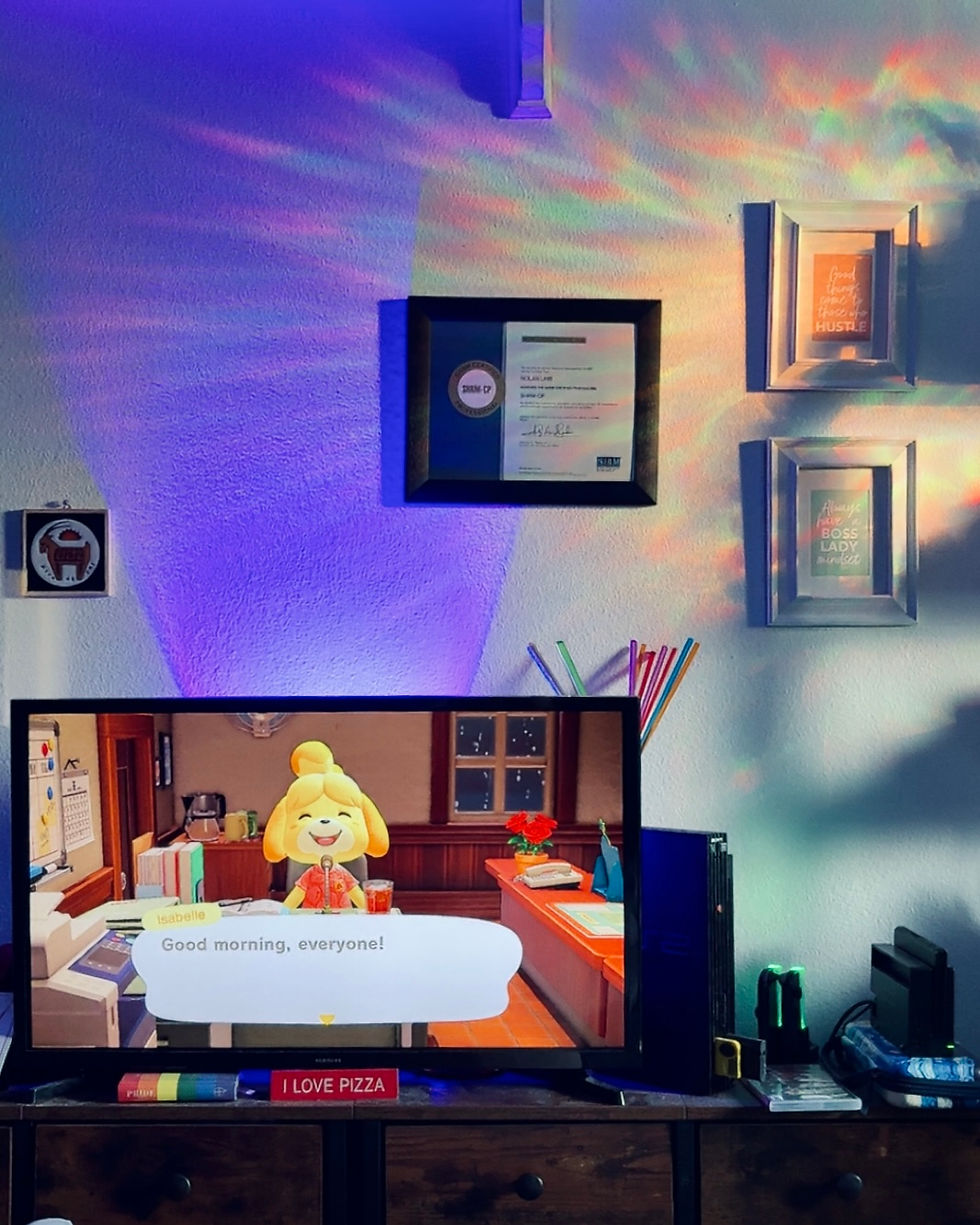
As anyone levels up in life, so do with them the stages and objectives. The more styles of game you play, the more you get a feel for how they are played. The longer you play a game, the higher the stakes become if anything were to happen to its save file. Different games come with different rules and mechanics, and I fare better in general when I know which game I’m playing with whom. Playing the title character in my own game can range from boring to exhausting, and I always pictured myself as a healer or some other sidekick character anyway.
I don’t think I’ve taken the time before to define what positive emotions or behaviors looked like to me. What no one told me is that positive emotions can be just as daunting to process as the negatives, if not more. Lists also do not come as easily to me as daydreaming about what I want my future to be. Getting caught up in possibilities and theoreticals has always been my downfall, especially with my disability.
Dating in the past several years has shown me how anyone can fall short of expectations that I didn’t realize I had. A recent time where I sensed things feeling uneven seemed as good a starting point as any to figure out what it felt like for me to be loved. For me to begin verbalizing this, nothing could have been off the table to mention. To dissect how and why I was loved only ever felt like looking a gift horse in the mouth before, and “the bare minimum” looks different to everyone. Having never done this for myself, anything is an improvement.
In any environment, I want to be treated well. I have rights to privacy and agency and self-expression, especially through creative pursuits, and I want those rights to be honored. I want to feel like my opinions and contributions matter. I want to recognize when I’m heard and appreciated, but I also need solitude to recharge. There are things that come to me more easily than others, and I am happy to provide my presence, skills, and resources. Because of my disability, expectations of timeliness just need to be managed and reasonably communicated. These especially apply at any place I work, where I’m more likely to recognize it happening in a place where I spend most of my time.
Aging is a privilege not afforded to everyone. Too many people leave this world before their time, and just as many or more also go on to stick around. How I felt about the idea of “myself in 10 years” at the age of 16 is not how I felt about it at 26, nor is it how I feel today at 36. Accomplishment is subjective; and fulfillment will find anyone anywhere, especially those that make the effort. Mindset, perspective, and lived experiences have come to matter to me more than age in dating, by a narrow margin but a margin nonetheless. But for me to think that I would be alone in feeling like a kid at any age would be a disservice to the fun and exciting people I’ve come to enjoy being around from all walks of life. Time is a constant, a flat circle, an illusion, and a social construct—yet in each moment including and outside of times we read and re-read this, we are the oldest we’ve ever been and the youngest we’ll ever be again.
With a partner, I want reasonably open and reliable communication. I want time together that I am comfortable to expect. I want to trade headspaces of judgment for those of curiosity and growth, but I also want to recognize and honor limitations and boundaries. I’m ready to offer in return everything that I want, including gentle yet direct accountability during times where one of us doesn’t deliver on something. Throughout everything, I envision an enduring sense of mutual exchange of affection, and a steady but strong enthusiasm that I won’t have to second-guess. These concepts and theoreticals aside, time together and physical affection were practically and realistically enough to keep me before, and I don’t see that changing.
Anger can tell us when our values, goals, or boundaries have been crossed. I grew up an angry child, but not always for these reasons. I tell myself now that in childhood I was dealing with a disability before either my family or I knew what it was, but I only ever took it out on my family in ways they didn’t deserve. The best apology anyone can offer is changed behavior, and coming this far into adulthood the best way I’ve thought to apologize to my family for a lifetime of that anger was by redirecting it to myself.
I justify my anger at myself because I can identify it, sit with it, and choose how to channel it. I face it alone so no one else has to, but people are also quick to call someone’s anger their “true colors.” Maybe there is some truth to our stress response saying something about our emotional hard-wiring, but it’s not the only truth. We are not only ourselves at our worst, and we are more than our thoughts, feelings, or actions. My instinct today, however, is to continue outgrowing and distancing myself from the angry child that I was until I know how best to hear him out. My cruelty to myself at my worst has always been by my choice, which says more about me than anything. One breakthrough moment I had in therapy this year was the first time telling myself that things don’t have to be this way.

No two relationships look or function the same, and my only frame of reference feels like a lifetime ago. As an adult, I have yet to completely define what a “relationship” would mean to me now. So far I’ve been able to visualize commitment to individual and mutual celebration and growth, a sense of joint adventure, and the shared comforts and contentment of companionship, sex, romance, and emotional support. This might be the most (or least) anyone can hope to gain from a romantic relationship, and I like to think that I’m capable of happiness on my own. Happiness shared is still happiness multiplied, and my connection with anyone in a romantic capacity is a connection I would want to protect.
To become a part of anyone’s life can mean just as much as them becoming a part of yours, so a sensible partner wouldn’t make you choose between them or your social circle. If anything, I’d hope they at least respect and want to join that circle themselves. My family and friends know who I’ve been and how I’ve enriched their lives so far. Only now do I realize how eager I am to enrich someone else’s life in more and different ways, and to have them and theirs join mine.
The reality of any interpersonal connection is that there will come times when connections have grown as much as they can. The thought of this used to scare and sadden me, but this doesn’t mean those connections have to go away or quit before they’ve even started. The future is a mystery only time can unravel. Change is inevitable and essential to growth, and nothing and no one is forever. The world at large is cold, chaotic, and unforgiving—anyone that’s had a parent might have heard a variation of that at least once. The most I can hope for is to be the warmth, calm, and forgiveness that people (including myself) need, despite my past and inner turmoil.
These writings have always been massive undertakings of looking backward and inward. I am not just my thoughts, feelings, or actions—but sitting with some of the worst parts of myself and my past while I write these writings makes it easy for me to lose sight of that when it can also show me the best parts of myself. Friends and family have always told me beautiful things to help me at my lowest points when I would post them on social media, usually just vague enough to get the point across that I was struggling. In addition to compliments, I’ve been told that I deserve better than what I tell myself, and that it’s hard work being kind to yourself by even just recognizing self-destructive behavior and the forms it might take.
One day during a low point a year or two ago, I pictured someone telling me that they hoped I was being kind to myself. I cried on the drive home for lunch that day. I couldn’t immediately visualize what that looked like to me, or what it looked like for me to be loved by someone else. Even if I still can’t fully picture it now, I don’t want that to stop me from trying to find it.


Comments